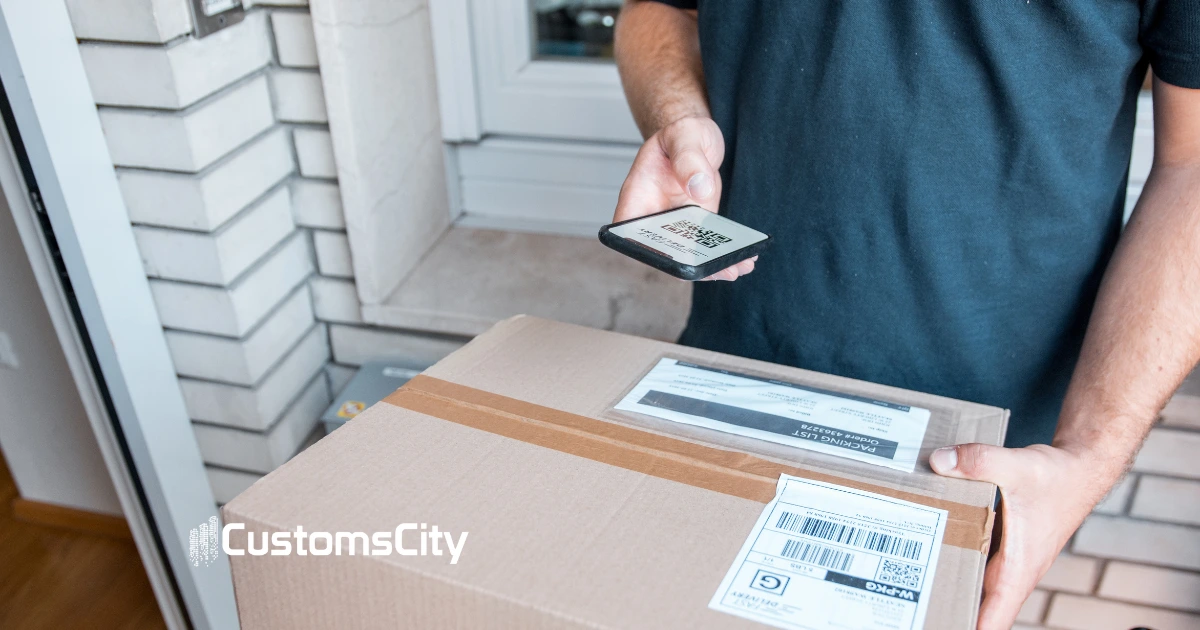

For years, eCommerce merchants, along with their clients, took advantage of the De Minimis rule. Packages valued at $800 or less could pass through U.S. customs with no duties, no fees, and no additional paperwork. During the eCommerce boom, this perk allowed small sellers to compete on a global scale and provided buyers with inexpensive overseas products with no Customs friction. This allowed eCommerce sellers to process tens of millions of low-value packages and provided businesses with speedy, inexpensive shipping, and little hassle.
That changed with Executive Order 14324 on July 30, 2025. Now, every international postal shipment headed for the U.S. must be declared, and duties must be paid—no matter how small the value. This shake-up comes at a time when cross-border eCommerce is at an all-time high. According to Pitney Bowes, U.S. households received over a billion international parcels in 2024 alone, many relying on that $800 exemption to keep costs low. The new rules create a fairer playing field for U.S. businesses.
So, what does this new landscape look like? If you handle U.S. postal shipments or coordinate with USPS, eCommerce partners, or customs brokers, you’re in the right place. This guide breaks down the post–De Minimis world—and what you need to do for smooth, compliant imports.
The End of De Minimis Treatment – What Changed and Why
Let’s keep it simple. For a long time, there was a straightforward rule: if a package arrived in the mail and its value was less than $800, it was mostly ignored—no entry forms, no duties, and no waiting. De Minimis was a rule in 19 U.S.C. §1321, and it was one of the main reasons eCommerce boomed. Startups and small brands loved it.
The new Executive Order 14324 ends this. Starting August 29, 2025, the De Minimis rule will no longer apply to international mail. All international mail will incur duties. 19 C.F.R. §145.12, regarding the mail and mail duties, is only a small part of a larger policy initiative on trade fairness and reciprocal tariffs, primarily concerning the U.S. and China.
Every package arriving by international mail now must be declared and duties paid—no exceptions.
In the past, the U.S. had a high De Minimis threshold. But with international sellers sending millions of small, duty-avoided parcels directly to US addresses with little to no safety regulations, lawmakers thought it was time to change.

Let's look at the eCommerce impact of the changes.
Let’s say you import handmade textiles or gadget accessories to the U.S. through USPS and sell them on eCommerce platforms like Temu or AliExpress. Until recently, shipping small orders for your customers was very easy, cheap, and did not cost any duties. That is no longer the case.
Your competitive edge—those razor-thin margins thanks to tax-free entry—could shrink. Now, all imports via international mail are treated like express courier shipments, facing paperwork and duties that used to only apply to larger commercial lots. That means higher landed costs, and you’ll need to figure out whether to absorb these costs yourself or pass them on to the buyer.
Real-life example: Glen Imports, a specialty electronics reseller, used to breeze through with 500 duty-free packages a month. With EO 14324, Glen and his team now work with a customs broker and rely on import management software to submit Pay.gov worksheets every month. They’ve noticed about a 10% uptick in shipping-related costs and have had to increase retail prices on some products to offset new duties.
Customs brokers are responding with full end-to-end automation solutions for their clients with offerings that span from data collection to worksheet submissions. Many are now automating integration with shipping platforms to help users auto-fill tariff rates and payment duties.
What do your customers think? They might sense higher prices and slightly longer shipping delays, especially while your team adjusts to the new clearance process. Being open and communicating about any changes to manage their expectations will help keep their trust.
If you do eCommerce or use USPS for imports, you need to pay attention to the new rule as pricing, compliance actions and other new deadlines will affect your bottom line.

Duty Assessment Options: How Will You Calculate Your Postal Duties?
Here’s the important part: you now have two ways to figure out how much duty you owe on postal shipments. Let’s see how they work, and which one might make the most financial sense for your business.
This is the good part: You now have two ways to calculate the duty level on your postal shipments. Let’s figure out how they work, and which one is best suited for your business.
Methodology 1 – Ad Valorem Duty: The Percentage Approach
This is the proverbial, percentage method. You will prorate your estimated value with the corresponding tariff rate (set on the IEEPA and the Harmonized Tariff Schedule).
In very basic math:
Duty = Product Value × Tariff Rate
Example:
What if one is importing an item worth $100 and pays 25 percent on it as tariff? One’s CBP international mail duty will be $25.
Think of this as a percentage-based tax depending on your product’s origin. It scales as lower-value goods mean a smaller duty bill; higher-value goods mean bigger duties.
Methodology 2 – Specific Duty (Flat Fee): The Temporary Shortcut
Want something simpler or just want to avoid math? There’s a flat-fee method—but it’s only around for six months (until February 28, 2026). Here’s how it works:
- $80 per item if the IEEPA/Reciprocal tariff is under 16%
- $160 per item if the IEEPA/Reciprocal tariffs are between 16% and 25%
- $200 per item if they IEEPA/Reciprocal tariffs are above 25%
It’s a straightforward, flat-fee option—but remember, after Feb 28, 2026, it goes away.
Scenario Comparison: Which Duty Method Could Be Cheaper?
Let’s examine how these two options compare in actual scenarios.
| Example Scenario | Item Value (USD) | Tariff % | Ad Valorem Duty | Flat-Fee Option | More Cost-Effective Choice |
|---|---|---|---|---|---|
|
Small gift item with a low tariff |
$40 |
12% |
$4.80 |
$80 |
Ad Valorem |
|
Mid-range branded footwear |
$180 |
20% |
$36 |
$160 |
Ad Valorem |
|
Luxury designer handbag, high tariff |
$800 |
28% |
$224 |
$200 |
Flat Fee |
|
Smartwatch, mid-level tariff |
$700 |
18% |
$126 |
$160 |
Ad Valorem |
|
Bulk mechanical parts, low tariff |
$600 |
15% |
$90 |
$80 |
Flat Fee |
Important takeaway:
If you ship high-value items, a flat fee could be more economical; however, for low-value shipments, the ad valorem method is nearly always the better choice.
Bottom line: Analyze your average shipment values and tariffs and talk it over with your customs broker or compliance team. You’ll need to stick with the method you pick for each month.
Step-by-Step: Clearing Postal Shipments with CBP Made Easy
It’s going to be alright, and there is no need to be stressed out. Take things at your own pace and remember there is no need to rush. If accuracy is maintained, there shall be no delays and shipments will be on time.
Step 1 – Register as a Qualified Party (CBP Form 5106)
Before you do anything else, you’ll need to register with CBP. This is where CBP Form 5106 comes in—think of it as creating your importer “profile.” Without this, you won’t have authority to file or pay duties.
You can use your Employer ID Number (EIN), Social Security Number (SSN), or apply for a CBP-assigned number if your business operates outside the U.S. Email your completed form to bondquestions@cbp.dhs.gov to get started; keep a copy with your records for audits.
Pro tip: Double-check all data on Form 5106. Delays will occur due to missing or incorrectly provided information.
Step 2 – Secure a Bond (CBP Form 301): Your Import Guarantee
Next in line, you want to obtain a customs bond (that’s a financial undertaking with a promise to pay all the set duties, taxes, and fees to the CBP, all captured in CBP form 301).
What does it mean in simple
- Continuous Bond:
If you have a habit of importing goods regularly, you will appreciate the annual term of the bond. It, however, imposes a minimum of $50,000 bond amount resting on 10% of the duties one records in a fiscal year.
- Single Transaction Bond:
If you are only an occasional shipper (shipping onece every season) will appreciate this bond. It usually set at 100% of the shipment value plus the duties at the border.
Step 3 – File Your International Mail Duty Worksheet on Pay.gov
Now we get to the paperwork. Paying duties means submitting your numbers through Pay.gov.
Here’s your action plan:
- Create a Pay.gov Account:
Register with ID.me or Login.gov—this secures your profile.
- Notify CBP:
Shoot an email to IntlMailDutyHelp@cbp.dhs.gov after setup, so they activate your access.
- Submit Your Worksheet Monthly:
Gather all shipment data from the previous month, fill out the Pay.gov worksheet, and send a copy both to CBPDM@cbp.dhs.gov and IntlMailDutyHelp@cbp.dhs.gov.
Accuracy matters:
It’s crucial that every entry is correct, wrong data can flag your account for review or audit. If you realize you made a mistake, log in to Pay.gov promptly and use the correction or resubmission function before the deadline. For big changes (like a misreported declared value), notify CBP for guidance.
Keep these as backup:
- Copies of submitted forms and emails
- Bills of lading
- Commercial invoices
- Duty calculation worksheets
- Communication with CBP and your broker
CBP audits often focus on documentation, so build a simple digital “import file” for each month.
Required Data Fields
Here’s what to include on your worksheet—don’t skip anything:
- Carrier Code (IATA/SCAC)
- Tracking Number
- Port of Arrival and Arrival Date
- Declared Value
- Country of Origin
- Tariff Rate
- Total Duties Owed
Accuracy here saves you from future audits and headaches.
Payment Deadlines: Mark Your Calendar
There’s a strict rule: all duties for a given month are due by the seventh business day of the next month. For example, if you clear shipments in September, payment’s due by October 9, 2025.
Just like paying a bill, suppose you import something and pay for it on the first of every month. If you forget the deadline, it is within the law that you will be penalized under 19 C.F.R. 24.3a. Repeated failure to make on-time payments will surely get you a target mark on your back and get you flagged by the CBP for extra scrutiny audits.

Bond and Carrier Obligations: What Every Importer Should Know
Both carriers and importers have specific bond responsibilities under the new policy. If you’re moving international mail into the U.S., you need an International Carrier Bond (19 C.F.R. §113.64). Importers or their customs brokers filing duties need a Basic Importation and Entry Bond (19 C.F.R. §113.62).
Why is the bond system in place?
CBP uses bonds as a safety net—if an importer defaults, the government gets paid anyway. The system works for both carriers and importers, but liabilities differ:
- Carriers are responsible for their own shipments—if mail is held up or underdeclared, the carrier might face penalties or additional scrutiny.
- Importers (or the qualified party on record) are liable for duties and compliance with all filing and payment deadlines.
Continuous bonds renew each year automatically, but if you miss payments, penalties and claims can follow, often resulting in frozen bond coverage or even a stop on future shipments.
Best practice: Set calendar reminders a month before renewal dates and keep an open line with your surety provider. This keeps your business running smoothly, even if something gets missed on your end.
Compliance Checklist for Postal Importers
Here’s a quick checklist to stay compliant and avoid fines.
Consider printing this and checking it monthly:
- Declare the correct country of origin for all goods
(Don’t guess; check supplier documentation and shipping labels.)
- Complete each month by using only one kind of duty assessment method
(ad valorem or flat fee).(Mid-month changes have compliance concerns.)
- Active customs bond coverage must be maintained constantly.
(Make sure you have reminders for yearly renewals.)
- Monthly invoices must be filled in accurately by the prescribed deadlines.
(Import boarding systems can be used to automate submission schedules.)
- All client relations static must be updated promptly.
(Changes to the address, business email or phone number require updates of client relations.)
- Digital files must be kept for the purposes of audits
(Records of the correspondence along with the forms and worksheets should be stored together.)
- For every item, be sure to find out the tariff rates and do not copy the last month.
(Track and Follow tariffs due to changes Bulletin from the official customs and border protection.).
- Pay all customs duties on or before the due date every month.
(Payments need to be scheduled for the due date to avoid unnecessary hassles.)
- Verify the values and the numbers that have been declared along with the paperwork of the shipment.
(Do not submit the paperwork until you have matched all of it with the shipment.)
- Monitor reciprocal tariffs that are being applied along with China and other important regulations.
(Work with a broker or subscribe to customs and border protection trade newsletters to help with updates.)
All these together greatly assists the user for clearing postal shipments.

Common Mistakes to Avoid
A small data error can delay your shipment for weeks — so double-check these items before you hit “submit”:
- Leaving blanks on your Pay.gov worksheet
- Even a missing tracking number or port detail can stall processing.
- Using the wrong tariff rate
- Double-check the Harmonized Tariff Schedule—rates aren’t static.
- Missing the monthly duty payment due date
- Make sure duty payment processes are automated or scheduled.
- Mixing the two duty assessment methods in a single month
- Once you choose for the month, stick with it—or risk compliance trouble.
- Letting your customs bond lapse or renew late
- Bond lapses can freeze your ability to clear future shipments.
Pro tip: Build a pre-submission checklist inside your import management program—this extra step can save your team time, stress, and unexpected fees.
Transition Period and 2026 Compliance: What’s Ahead
Right now, you have some flexibility. That flat-fee option, the specific method, method—will expire after February 28, 2026. After that, the ad valorem (percentage) duty system becomes the single standard for all U.S. postal shipments.
Looking ahead:
International mail compliance is most likely going to be automated digitally. More brokers and importers are using intelligent platforms and specialized AI technology to pre-fill forms, identify absent information, and simplify submissions to Pay.gov and CBP’s ACE system. Further adjustments to reciprocal tariffs for China along with ongoing refinements to trade policy will continue to take place. Updated technology compliance will be very beneficial.
Innovative importers and their brokers are automating the entire process which includes completing declarations, payment of duties, and the archiving of the necessary documentation. This is time-efficient and helps in adapting to the continuous changes and quick processing of U.S. customs which is expected to be significantly more advanced than it is now, by 2026.
Conclusion
There are no two ways around it: the ending of De Minimis treatment is a considerable change. Although it may seem like a lot of extra planning and paperwork, these new compliance steps are made for fair competition and keeping trade open. If you understand your options, comply with the duty assessment, and build steady compliance routines, these points will help a lot.
I know these points might sound a bit confusing, but let me assure you that with some planning, focused actions, and the right strategies, you will find that postal clearance is easy and predictable. Being compliant and proactive is a necessity.
Your supply chain will only improve by embracing these new measures.
For continued compliance, work with your customs broker or trade adviser and seamlessly integrate your business with CBP’s post–De Minimis framework. Focusing on trade will make the remaining adjustments seem manageable.