
Global trade has rebounded after the pandemic slump and hit a record high of $33 trillion in 2024. This value is up by $1 trillion from the year before, marking a new era of growth in worldwide commerce.
International trade agreements facilitate cross-border trade by streamlining the smooth movement of goods across countries. These documents are crucial for commerce growth, especially as consumers today prefer to shop for products online.
Read on to explore how trade agreements simplify global commerce and how you can create future opportunities through trade partnerships.
Understanding Regional and Bilateral Trade Agreements
Regional and bilateral trade agreements are pivotal to enhancing trade between two countries:
Regional Trade Agreement (RTA)
An RTA is a treaty between two or more countries within a geographical region to streamline trade and economic cooperation. These agreements reduce or eliminate trade barriers such as quotas, tariffs, regulations, etc., making it cheaper for traders to move goods between boundaries. According to the WTO, there are currently 373 RTAs in force.
There are six types of RTAs:
- Preferential Trade Areas (PTAs): To grant preferred access to specific goods from certain nations, but not to eliminate the trade barriers between countries.
- Free Trade Areas: To eliminate all trade barriers among member countries and allow the free movement of goods.
- Customs Unions: To remove trade barriers between members but retain barriers with other countries.
- Economic Unions: To use a single currency, adopt a set of economic policies, use common external trade barriers, allow free movement of resources and eliminate trade barriers.
- Common Markets: To remove internal trade barriers, adopt common policies for external trade, and allow free movement of resources among member countries.
- Full Integration: Full integration of member countries, including political and economic policies.
The NAFTA (North American Free Trade Agreement) and APEC (Asia-Pacific Economic Cooperation) are some examples of RTAs.
Bilateral Trade Agreement (BTA)
BTAs are trade agreements established between two countries. They aim to reduce trade and investment barriers, such as import quotas, export restraints, etc. They help promote economic cooperation and increase market access for products or services between signing countries.
Some of the key features of a BTA are:
- Tariff reduction: Tariffs between participating countries are lowered or removed.
- Market access: Countries get increased access to each others’ markets, allowing businesses to expand their reach.
- Regulatory alignment: BTAs standardize regulations, labour standards and environmental protections.
- IP rights: BTAs provide IP protection to foster innovation and creativity.
- Protection against unfair trade practices: Safeguards countries against dumping and using unfair subsidies.
The US-Canada Free Trade Agreement and EU-Japan Economic Partnership Agreement are some examples of BTAs.

How Trade Agreements Affect Tariff and Non-Tariff Barriers
Tariff barriers (such as import duties, valorem duties, etc.) and non-tariff barriers (such as licensing, quotas, technical standards, etc.) can impede global trade significantly. Trade compliance agreements aim at reducing or eliminating these barriers to help smoothen the flow of goods and services across borders seamlessly:
Tariff Barriers
Countries impose tariff barriers on imported products, making them less competitive against local products. Trade agreements help reduce these tariffs, achieving better proliferation of imported goods in the market. Additionally, trade agreements:
- Negotiate and establish tariff reductions for certain key goods and services that benefit growth and development in both countries.
- Implement phased tariff reductions that gradually reduce tariffs to help domestic industries adjust to the new influx of competition.
According to the Centre for Economic Performance, the ACFTA (ASEAN-China Free Trade Area) has eliminated tariffs for 90% of the goods traded between member countries, facilitating free trade.
Non-Tariff Barriers (NTBs)
These tariffs (such as licenses) restrict trade by assessing the quality of goods and services traded. They also target safeguarding internal and local industry by limiting the amount of imports, thus stunting global trade after a certain limit for some time. Trade agreements help traders negotiate these restrictions to establish flexible trading mechanisms:
- Trade agreements harmonize the technical standards and regulations to reduce compliance costs for exporters.
- Trade agreements simplify customs procedures to reduce administrative burdens and delays.
- Trade agreements also address the Sanitary and Phytosanitary Measures (SPS) to ensure they do not restrict trade between two countries.
A LSE study highlights that reducing NTBs through deep-trade agreements helped boost international trade (between member countries) by 25% for products and by 30% for services.
Trade agreements reduce barriers to trade between countries, helping to bolster economic growth for all members and enhance trade relations.

Streamlining Customs Procedures through Harmonized Rules
Trade agreements enhance customs compliance by harmonizing trade rules between member nations. It enhances trade efficiency, improves competitiveness and reduces paperwork during trade.
According to a study on the Digitalization of Customs Procedures, Ukrainian exporters experienced a 15% improvement in customs efficiency by digitalizing their customs procedures.
Harmonized rules, such as those outlined in the World Customs Organization’s (WCO) Revised Kyoto Convention (RKC), establish a standard framework to simplify the customs processes between participants. Here is how trade agreements streamline customs procedures through harmonized rules:
1. HS Codes
Harmonized System codes (HS codes) are standardized codes for classifying goods. They ensure consistency and reduce errors in customs clearance processes. Implementing automated systems for HS code classification helps expedite customs clearance.
2. (Electronic Data Interchange) EDI
EDI facilitates the electronic submission of customs documents, helping reduce physical paperwork and associated processing time. Customs processing can be sped up by adopting EDI systems that connect businesses/traders electronically and directly with customs authorities.
3. Simplified Customs Declarations
Standardizing forms helps reduce the number of documents required to declare customs at the border. It helps to have a unified customs declaration form that meets international standards. Its universal nature helps different countries utilise this form and participate in convenient trade.
4. Enhancing Risk Management
Harmonized rules provide a universal framework for risk management systems that apply uniformly across member countries. They reduce inconsistencies and discrepancies, making it easier to focus resources on high-risk shipments while expediting low-risk parcels.
5. Training
Harmonization standardizes training guidelines for customs officials and outlines best practices. Establish continuous training programs that keep the officials updated with the latest harmonized rules and international trading best practices.
6. Trade Partner Collaboration
Harmonized rules establish a common framework for customs procedures so that member countries can easily align their processes and share best practices in international trade. It removes most of the trading roadblocks and provides a common ground for countries to trade on.

Future Opportunities: Exploring New Trade Partnerships
Trade facilitation measures can reduce trade costs by 16.73% for the least developed countries. This statistic highlights the importance of establishing smooth trade between nations using trade agreements.
Exploring new trade partnerships is essential for businesses aiming to expand their global footprint and contribute to their country’s economic growth.
You can explore new future opportunities in trade partnerships by studying these trends:
1. E-Commerce and Digital Trade
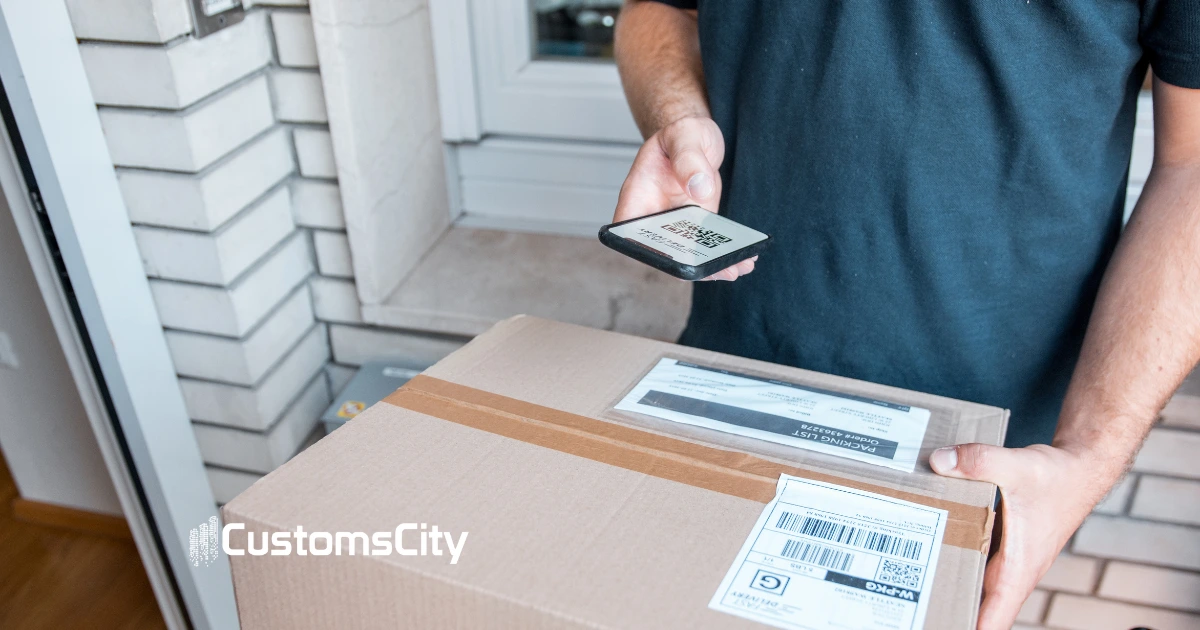
International markets have become more accessible with the rise of eCommerce platforms such as Amazon and Alibaba. Governments have adjusted regulations to facilitate this digital trade and simplify customs procedures for online sellers. Consider investing in eCommerce logistics and compliance solutions to leverage this simplified customs route.
2. Sustainable Trade
Lately, there has been a growing emphasis on sustainable and ethical trading practices. Countries are imposing carbon border taxes and incentivizing traders who use renewable energy or sustainable practices, which impacts customs regulations and processes. Consider applying sustainable practices to your supply chains to benefit from favourable customs regulations.
3. Regional Trade Blocs and Partnerships
Countries are forming regional trade alliances, such as the Regional Comprehensive Economic Partnership (RCEP). These partnerships reduce tariffs and simplify customs procedures within regions. To grow your business beyond boundaries, you can explore partnerships within these trade blocs to benefit from streamlined customs and reduced tariffs.
4. Supply Chain Diversification
Supply chain diversification has become popular after COVID-19 as it helps businesses mitigate risks. The increase in international eCommerce has led to diversified supply chains, requiring smoother cross-border movement and efficient customs. Consider adopting an automated customs compliance solution on board to facilitate international trade.
5. Digitization of Customs Compliance
Digitization of physical processes is urgent, especially for operations such as customs compliance that require heavy paperwork.
It helps expedite and automate clearances, flag high-risk packages, pre-emptively acquire permissions and approvals, and improve transparency overall. Invest in robust process digitization and automation for your business’s customs arm to reduce paperwork and enhance processing efficiencies, simplifying compliances.
Simplify Customs Procedures with CustomsCity
The primary purpose of trade agreements is to facilitate international trade by creating clement ecosystems for participating nations and boosting the exchange of goods and services at mutually beneficial terms.
However, these agreements do not eliminate the requirement for customs compliance for the goods that cross the border. It is essential to be equipped with a reliable customs compliance tool that helps you automate the paperwork, submissions, approvals, intimations, notifications, etc., so that your goods seamlessly reach their destination.
CustomsCity is a platform that unifies customs operations on a single interface. CustomsCity’s dashboard allows you to manage your manifests, customs forms (such as Type 86), CBP Manifest Queries, and more.
The platform partners with authorities like International Trade Council, U.S. Customs and Border Protection, CBSA-ASFC, and more to provide a holistic customs solution to streamline your compliances.
Book a demo to simplify your customs procedures today!